September 1, 2026
Jessica Sweater – A Cozy, Oversized Mohair Knit with Dropped Shoulders
Wrap yourself in a cloud of softness with the Jessica sweater! This beautiful, oversized top-down knit features a chic dropped-shoulder (raglan-yoke) silhouette, seamless construction, and a perfectly tailored neckline using German short rows. It’s a dreamy, intermediate-friendly project that results in a luxurious, boutique-quality wardrobe staple.
Jump to pattern instructions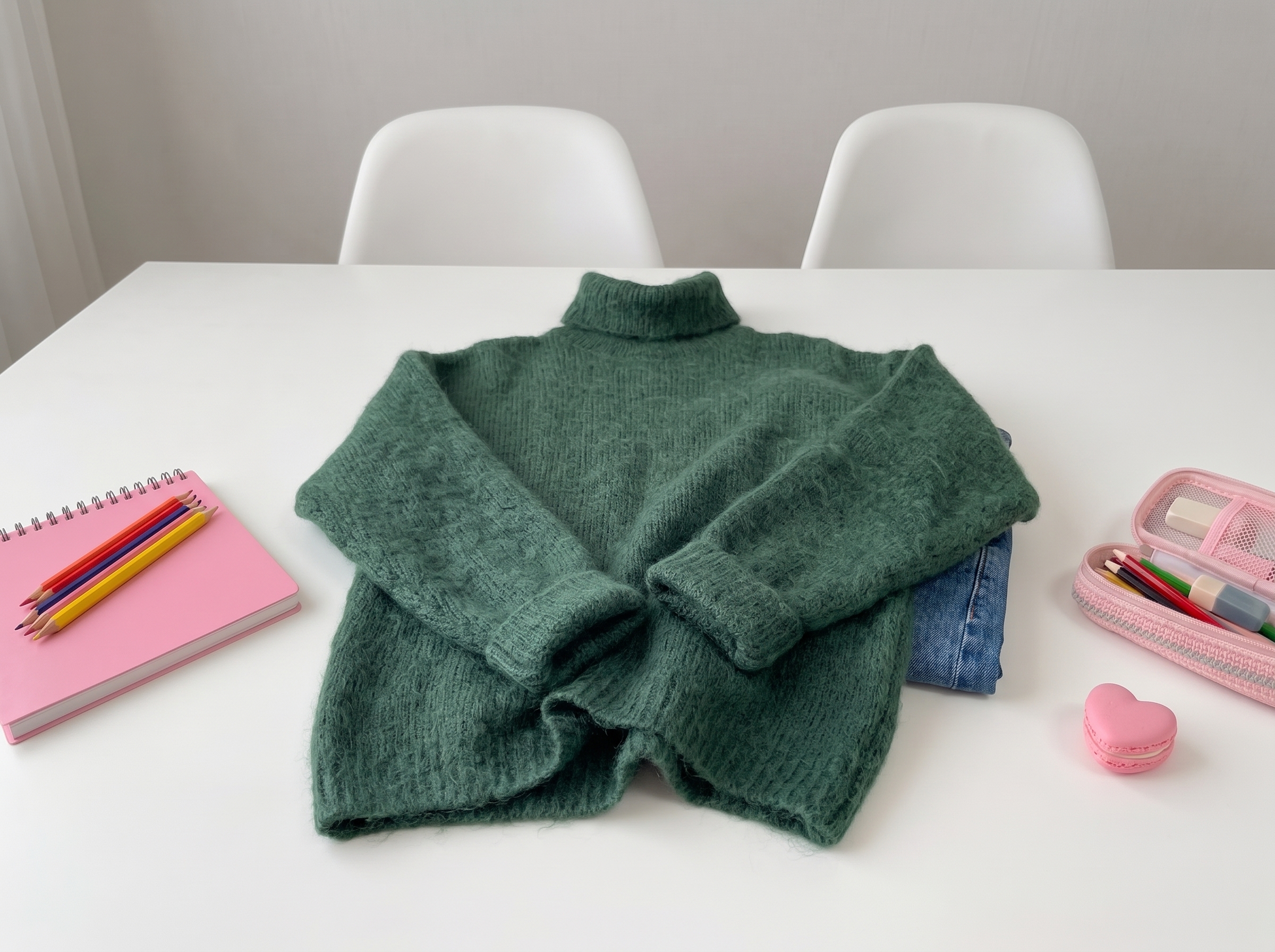
Jessica Sweater – Complete Step-by-Step Pattern
1. Gathering Your Supplies
Because this sweater relies on a beautiful, ethereal halo, choosing the right yarn is half the fun! The pattern is designed for a fluffy, lightweight yarn held double to create a custom, cloud-like fabric.
- Yarn: Mohair (approx. 210–250m / 25g) held double. (Alternatives: "Mink down" 350m/50g or Angora held double).
- Needles:
- 3.5 mm circular needles (40 cm) for the neckline ribbing.
- 4.5 mm circular needles (40 cm, 50–60 cm, and 80–100 cm) for the yoke, body, and sleeves.
- 3.0–3.5 mm circular needles (50–60 cm) for the bottom hem and sleeve cuffs.
- Notions: Stitch markers, a tapestry needle, a crochet hook (for binding off), and a measuring tape.
- Gauge: 18 stitches x 25 rows = 10 x 10 cm (4" x 4") in stockinette stitch on 4.5 mm needles, after washing and blocking.
- Pro Tip: Always knit a swatch and block it! Mohair blooms beautifully after its first bath, and you want to ensure your sweater fits perfectly.
2. Abbreviations & Special Techniques
Don't let these terms intimidate you; they are just the tools we use to shape the sweater beautifully!
- M1R / M1L: Make 1 Right / Make 1 Left (lifted increases from the strand between stitches).
- German Short Rows (Обвитие петель): A seamless way to shape the neckline. You’ll slip a stitch, bring the yarn forward, slip the stitch back, and pull the yarn tight to create a "double" loop. On the return row, you'll knit or purl both legs of this loop together to hide the turn perfectly.
- Top-Down Construction: The sweater is worked from the neck down, allowing you to try it on as you go and easily adjust the length of the yoke, body, or sleeves.
3. The Neckline & Yoke (The "Rostok")
We start at the very top, using German short rows to create a custom, tailored fit that sits higher in the back and lower in the front, preventing that dreaded saggy neckline.
- Cast On: Using 3.5 mm needles, cast on 96 stitches + 1 for joining in the round. Work 4–6 rows of 1x1 or 2x2 ribbing (approx. 2 cm).
- Setup: Switch to 4.5 mm needles. Work 1 round of stockinette, placing markers to divide the stitches for the left sleeve, back, right sleeve, and front.
- Short Row Shaping: You will work back and forth across the back and sleeves, making increases (yarn overs) at the raglan lines on every right-side row, and turning the work a few stitches earlier each time to build up the back neck.
- Joining: Once the short rows are complete, you’ll work a final connecting round that joins the work, neatly knitting the "double" loops together with their neighbors to make the turns completely invisible.
4. The Body
Now for the most satisfying part: watching that beautiful, oversized silhouette take shape!
- Raglan Increases: Continue knitting in the round, making increases at the raglan lines in every round (or every other round, depending on your desired width) until the front and back each have the target number of stitches for your size (e.g., 100 to 126 stitches).
- Separating: Once the yoke is the desired depth, you’ll place the sleeve stitches on hold and cast on a few new stitches for the underarms.
- Knitting the Body: Join the front and back and continue knitting in seamless stockinette in the round until the sweater reaches your desired length (the pattern recommends adding an extra 5–10 cm for a relaxed, oversized drape, as dropped shoulders tend to ride up slightly when you raise your arms).
- The Hem: Switch to smaller needles and work 2–3 cm of 1x1 ribbing. Bind off loosely and stretchily to ensure the hem doesn't curl or pull.
5. The Sleeves
We’ll pick up stitches directly from the armholes, giving us total control over the sleeve length and fit.
- Pick Up: Starting at the center of the underarm cast-on, pick up stitches evenly around the armhole edge.
- Sleeve Cap Shaping: To give the dropped shoulder a beautiful, natural drape, work a few German short rows at the top of the sleeve, gradually incorporating all the stitches until you are knitting in a continuous round.
- Tapering: Knit straight down in stockinette, decreasing 2 stitches at the underarm marker every few rounds to gently taper the sleeve toward the wrist.
- The Cuff: Switch to smaller needles. Work a row of decreases to snug up the circumference, then work 2–3 cm of ribbing. Bind off loosely using a stretchy method.
6. Finishing & The Magic of Blocking
This is the grand finale, and arguably the most satisfying part of the process!
- Weave in Ends: Take your time weaving in those fluffy tails on the wrong side.
- Wet Blocking (Crucial Step!): Submerge your sweater in cool water (max 30°C / 86°F) with a gentle wool wash. Let it soak for 20–30 minutes. Never wring or twist mohair! Roll it in a clean towel to press out the water.
- Shaping: Lay the sweater flat on a dry towel or blocking mat. Gently pat it into your exact finished measurements. Pro Tip: While the sweater is still damp, you can gently tug on the sleeves or body to add a few extra centimeters of length if needed.
- Dry: Let it air dry completely, flipping it occasionally to ensure even drying. The blocking will relax the fabric, bloom the mohair halo, and transform your knit into a luxurious, cloud-like garment.
Final Section: Where to Go from Here
Take a deep breath, put the sweater on, and look in the mirror. You did that! By completing the Jessica sweater, you’ve conquered top-down construction, German short rows, and professional finishing techniques for delicate yarns. These are the exact skills used by high-end fashion designers to create custom, drapey garments.
Now that you know how to manipulate these shapes, try experimenting with different yarn blends! A silk-mohair blend would give this sweater a gorgeous, luminous drape for spring, while a rustic, fluffy mohair would make it the ultimate cozy winter companion. Happy knitting, and enjoy your beautiful new wardrobe staple!